

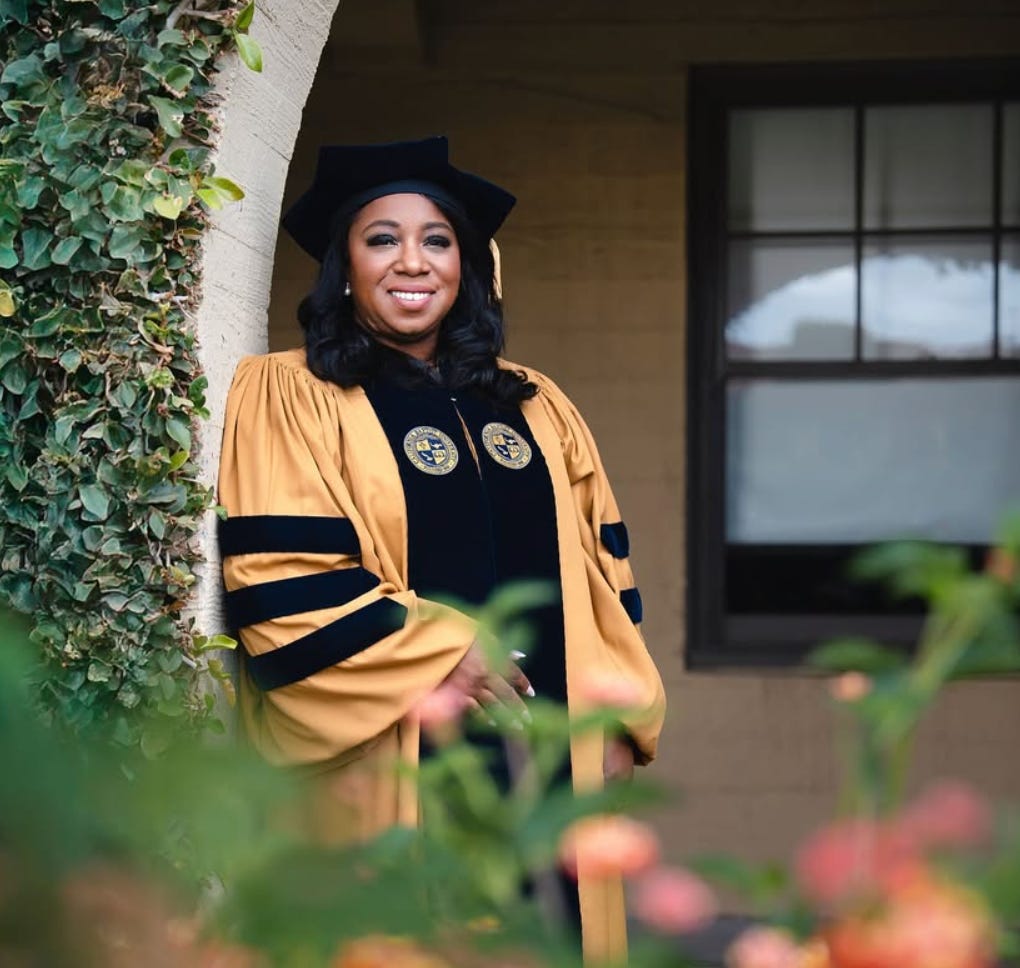
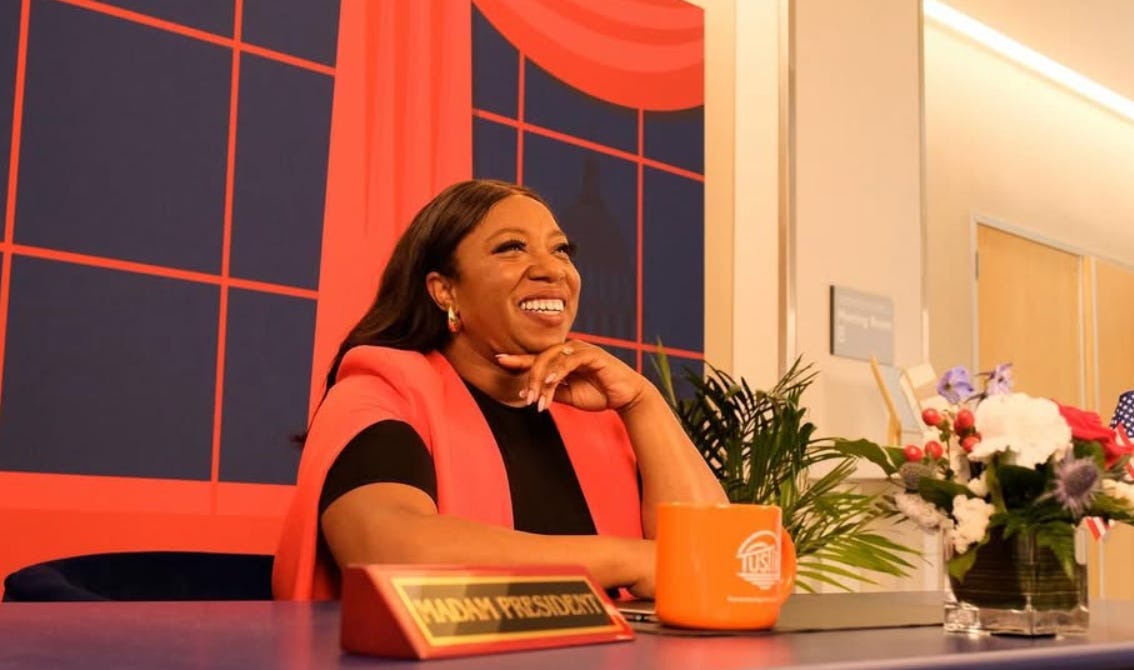
Letitia Clark is my type of local politician.
First, the Democratic candidate for Tustin mayor ranks SWV as her all-time favorite musical act, and nobody (and I mean nobody) has utilized a Michael Jackson jam better than Sisters with Voices.
Second, while so many of our local leaders have rarely left the secure bubble of Orange County, Clark was working New Orleans during Hurricane Katrina—and refused to bolt, even when her family begged her to.
Third, she writes books.
And fourth—she’s just … normal. Not snazzy. Not trying to impress you. None of the glaze of far too many who enter the field. Hell, the other day the (arch-conservative) Orange County Register (wrongly) endorsed incumbent Austin Lumbard … and Letitia texted it to me. Not to bash Lumbard, not to whine and complain. Just because she knew I was writing about her, and she considered the information relevant. That, my friends, is integrity.
So—to hell with the Register, to hell with TLC and to hell with MAGA. The Truth OC is officially endorsing Letitia Clark (who served as Tustin mayor in the early 2020s) to return to her job, not just because her opponent is a bit of an amoeba, but because she has integrity and decency and a whole lot of passion for her hometown.
One can visit her website here, and donate to her run here.
Letitia Clark, no fear, have no fear—the Truth OC Q&A is right here …
JEFF PEARLMAN: Letitia Clark, first of all, thank you for doing this.
LETITIA CLARK: It is my pleasure.
JEFF PEARLMAN: Okay. This is a question, a recurring question I ask people, and you could definitely give me the cliche answer or you can give the raw answer. It’s totally up to you …
LETITIA CLARK: Okay.
JEFF PEARLMAN: But since I started this website, I’ve decided that anyone who runs for local office has some kind of mental imbalance because there’s no glory in it whatsoever. There’s minimal money in it, if any money in it, whatsoever.
LETITIA CLARK: Yes.
JEFF PEARLMAN: You just become a receptacle for everybody’s complaints and anger. And we live in more politically divided times than ever before. You served on the city council, you were mayor. Being sincere, why would any sane human being—and you do seem to be sane—want to do this?
LETITIA CLARK: Yeah, no, you’re 100% right. And I’ve decided to put people in three categories because sometimes I wonder why people are in it and I have decided it’s three buckets. It’s either one, you’re like a total egomaniac and it’s all about your ego and you need to be somebody or, two, you’re trying to make up for lost time like something happened in high school or something that just like ... that there’s some validation needed or, three, you really have a heart to serve.
And it’s usually those three that I find and they vary in a degree. But yeah, for me really, it all harkens back to how I even got into politics, which was in college. I grew up in Orange County, went to Tustin High School, went to Xavier University of Louisiana in New Orleans. I wanted really badly to go away to school. My parents were really strict growing up and I was really itching to get away.
Well, I applied to a bunch of schools in DC and I thought I was going to go to Howard or Georgetown or something. My parents were like, “You’re not going there. We don’t have any family there.” So I was like, “Well, where can I go?” And they’re like, “Well, we have tons of family in Louisiana, so anywhere in Louisiana.” And so, I settled on Xavier, wound up being a Catholic school, HBCU that had a curfew of 10 o’clock on the weekdays and midnight on the weekend.
So I didn’t transfer over to much freedom there either, but was a pre-law major, thought I wanted to go to law school, started interning for some local campaigns to make extra money from the pre-law club opportunity. And I saw for the first time Black women running for office. I had never seen that growing up. I didn’t even know that was a possibility. Changed my major from pre-law to political science and then got an internship with the City of New Orleans my senior year of college.
And then I started working as a legislative aid for a council member right out of college. That was ‘05. So I’m about six months into my job as a legislative aid and Hurricane Katrina is approaching the city and I was kind of a guppy. I didn’t know much and got donuts and coffee and can take messages. So at the time my boss was saying, “Okay, you’re essential personnel, you have to stay.” And so I was like, “Oh, I’m important.” So I stayed and I saw everything unfold.
I saw the lack of planning, but then I also saw people 1,000% committed to helping the city come back and restore and heal. And I just got the bug and I learned what it meant to be in a position of influence when it mattered. I learned how important it was to be at the table and to be able to put a voice to people in need. And so I just kind of got the bug at 22 and it hasn’t left me. And so that desire to be at the dais and make decisions on behalf of other people.
Knowing that I have lived through times where lives were literally on the line based on the leadership in place. So that’s why I do it. It’s some kind of weird fixation that I’ve had since then.
JEFF PEARLMAN: You’re a kid from California, you’re in New Orleans during Katrina, everyone’s leaving, you’re staying. I’ll throw a big softball at you. What do you remember ... what actually haunts you in your memory all these years later?
LETITIA CLARK: My parents begging me to find a way to come home or just leave and get out. And yeah, I was just so naive that I was like, “This is my shot. It’ll be fine.” There’s never been a devastating hurricane, or at least it’s been over 40 years. Hurricane Betsy was 40 years prior, but it was another issue where the levee had broken. It wasn’t the actual storm. So I just had no idea how bad it could be, but I wind up losing my car. My entire apartment was flooded.
I was in a hotel and sheltered in place with everyone else. But when we did get back to a point where we could get back into the city, well, we had to evacuate the area just for a couple of weeks and then we went back in and the hotels were open for essential personnel and I had to walk to work. I didn’t have a car. I had to go to Goodwill for clothing, accept any donations that were coming in. Yeah, even to this day, I mean it’s over 20 years … I don’t enjoy eating off a plastic cutlery because that’s all we had for so long, because the water still wasn’t clean enough to wash dishes and things like that. And I can still smell some of those scents that existed in the city because of the rotting fridges, rotting bodies. So there’s things like that. There was a documentary that came out last year, 2025. I couldn’t watch it.
JEFF PEARLMAN: Yeah.
LETITIA CLARK: I tried and I was seeing people that I knew and I couldn’t even get through the first episode.
JEFF PEARLMAN: It’s interesting because I’m from New York and I lived through 9/11 and saw one of the planes. Can’t really digest it. And in the aftermath, in the immediate aftermath, Rudy Giuliani was like this hero, right? He’s doing a great job. He’s pointing. And in a way you kind of had the same thing in New Orleans with Ray Nagin, correct?
LETITIA CLARK: Yeah. At first it was like, yes, he’s fighting for us. He’s getting mad with the federal administration. We need somebody to be angry like him. And then it kind of just all took a turn and all of the whatever incompetence, whatever corruption existed beneath the surface and we all lived in it. It all started creeping up and becoming illuminated. And then all of a sudden it was, we got to clear the swamp literally and figuratively.
And it was just a place where a lot of folks were just fed up and really felt like this only happened because folks, they weren’t good stewards of public dollars. They diverted federal funds to handle local projects when it should have been invested in reinforcing the levee. There were buses that people could have gotten on. And then thinking about the high poverty level, over 60% poverty level in New Orleans, and then obviously it was a heavily minority city.
So all those things played into the aftermath of why, how did this happen and how were so many people impacted? So yeah, I mean, again, it just stuck ... it was such a transformative time in my life and I didn’t have kids or a husband. Had it been a different situation, I definitely would have left.
JEFF PEARLMAN: Sure.
LETITIA CLARK: Because it would’ve been too much on the line, but it was just me. So it’s like, “Hey, let’s stay.” But it wound up being the best thing to ... everyone has that one thing that you can harken back to what changed the trajectory of your life and that was it.
JEFF PEARLMAN: So here’s a question for you. You’re in your 20s, this happens. I could see a lot of people being like, “Screw government. It just sucks. These people suck. They’re just greedy and callous and they don’t care and they’re ineffective. Why would I waste my time with this?” Yet somehow it seemed to have at least long-term and opposite effect on you. Why would you say that is?
LETITIA CLARK: Because I think I found out how simple it is just to care and do the right thing, that it really was just a difference in knowing that if I just care a little bit and also knowing that if good people who care and want to do the right thing do not step up and fill these seats, people who have their own agenda will, people who don’t care will, people who don’t have a commitment for a long-term stint, they will come in and make short-term decisions selfishly.
And I guess I just kind of saw the result of that. And so I felt like if I had the ability and the wherewithal that I would treat this almost like it was jury duty. It’s just an obligation that if you have the ability to do it, then you should.
JEFF PEARLMAN: So you had a bunch of interesting jobs actually. You worked for the Georgia State Assembly, you worked for the American Red Cross, you worked for the New Orleans Metropolitan Association of Realtors. You bounced around quite a bit before coming back to California. What actually brought you back to California?
LETITIA CLARK: Just personal. I was going through a divorce and honestly, when I think back to how I even met my ex, it was definitely kind of trauma bonding through Katrina because when I look back, it’s like, how did I even end up with this person? But we were bonded through the devastation that was going on in New Orleans. And so when all the dust settled, we just were not right for each other. And my twins were five years old at the time. They’re 19 now.
And so, when we were splitting, it was like I had spent enough time in New Orleans. It was 10 years at that point, and I wanted to be closer to family. My parents were still here, and so it was like, let me move back to what’s familiar. And then starting to really understand how great Orange County seemed comparatively. I don’t have to worry about good schools. I don’t have to worry about crime and just a lot of the things that kind of plague a big metropolitan city.
So yeah, that’s what brought me back. And then I was pretty determined not to just have to start from ground zero. So when I moved back, even though I lived with my parents for a year, I was just really ready to get back into it and started volunteering for the Tustin Community Foundation and then, found a job with the American Academy of Pediatrics. I just wanted to be in the mix and connected to community and public service again.
So I started volunteering right away, and then that eventually led to me trying to seek a commission seat in Tustin. And essentially that’s when the narrative that I learned to understand were telling me, “Hey, it’s not your turn and no one like you has ever served in this body. And so we applaud your efforts, but we’ve already got people in place that we would like to see in these seats.”
JEFF PEARLMAN: Was that from within the Democratic Party?
LETITIA CLARK: No, no, no, no. That was at the powers that be on the current Tustin City Council.
JEFF PEARLMAN: Got it.
LETITIA CLARK: Which were Republican men.
JEFF PEARLMAN: You speak longingly of returning to Orange County and the sort of comfort of Orange County. And we moved here 12 years ago, and I’m a Jewish guy from New York, right? And you can’t get a decent slice of pizza worth a damn here, and you can’t get a good bagel, and not that many Jews around here. And it is almost, surprising might be the wrong word. But you’re a Black woman who spent a lot of time in New Orleans who went to Xavier in New Orleans.
LETITIA CLARK: Right, right.
JEFF PEARLMAN: Speaking longingly about almost the bubble of Orange County.
LETITIA CLARK: Yeah.
JEFF PEARLMAN: Okay. It’s an interesting sort of phenomenon right there.
LETITIA CLARK: Sure, sure.
JEFF PEARLMAN: So what is it, as a Black woman in Orange County ... and there are not a super, super-duper ton of Black women in Orange County comparatively.
LETITIA CLARK: Yeah.
JEFF PEARLMAN: What is the yin and yang for you of Orange County?
LETITIA CLARK: Yeah, I mean, I kind of had this really enchanted type of childhood because my dad grew up here and he was very connected and had this affinity for this place because he was born and raised here. So my grandparents came here from Little Rock, Arkansas, and they moved to Laguna Beach. They lived on a segregated street in Laguna Beach on Ocean Avenue.
JEFF PEARLMAN: Wow.
LETITIA CLARK: My dad was the first African American baby born at Hoag Hospital when it was Hoag Presbyterian Hospital.
JEFF PEARLMAN: Wow.
LETITIA CLARK: Yes. And so my grandfather ran a gas station on Coast Highway, and my dad talks about his childhood of just being a feral kid, just being able to go to the beach and run around Laguna Beach. And they definitely experienced their fair share of racism. I mean, my grandparents talked about trying to buy a house in Huntington Beach and essentially got turned away from the HOA saying that the quota had been met and they had to take the developer to Fair Housing Court to get their deposit back.
JEFF PEARLMAN: That sounds very Huntington Beach.
LETITIA CLARK: Yeah, right. Yeah, right. Yeah. Even then, right? And so we have those little stories, but it wasn’t like the headline of our family’s experience here in Orange County. And when I went to Tustin High School, the Marine base was still open. And I remember going to school with kids who were citizens of the world. I mean, a lot of these kids had lived all over the world, and so there was just a lot of tolerance. There was a lot of co-mingling of just kids from every background, and that stuck with me.
And so, when I was able to think about how I wanted to raise my kids, I did start to think about my experience here in Orange County and enjoying going to the beach and enjoying the diversity that existed. Because as you can imagine comparatively, although I ran to an HBCU because I wanted that experience, I kind of was a fish out of water. I had never been around that predominantly Black environment, and I had to learn how to have a voice in a space like that, which eventually I did.
But yeah, I kind of longed for the childhood that I had for my kids, a lot of diversity, a lot of beauty outside. And yeah, we’d have to search for culture here and there, but growing up, there was a better percentage of a Black community, particularly in Santa Ana, that we were very connected to. I grew up in a Black church. We still go there today, Friendship Baptist Church in Yorba Linda of all places. And we have great community there and there are African American families from all over Orange County.
But yeah, I think that’s what kind of drew me back was just that sense of childhood. And even at Tustin, although I was a minority young Black girl, I was the senior class president, I was the captain of the cheerleading squad, I was homecoming queen. So for me, being Black never felt like I couldn’t. And I just had that same mindset. And then, when I came back to Orange County, I was even more emboldened because now I understood Black excellence.
Now, I understood what it meant to be empowered and use my voice. And so, I kind of took that with my really optimistic view of how I grew up here in Orange County and then, just kind of hit the ground running versus letting that feel like that was supposed to be a barrier for me or that I couldn’t, and I wasn’t allowed into certain spaces, even though ... I’m sure it existed, but I just had a naivete that just allowed me to be bold and move forward regardless.
JEFF PEARLMAN: So you ran for the city council in 2016 …
LETITIA CLARK: Yeah.
JEFF PEARLMAN: You’d worked in politics in New Orleans, in Louisiana. What did you learn from having your own election for the first time?
LETITIA CLARK: So you mentioned a little bit about my career. When I worked for the Georgia General Assembly after I left New Orleans for just a stint, because I was overwhelmed from all that was going on and then eventually moved back, I worked for one of the most conservative speakers of the house in Georgia history. His name was Glen Richardson. Glen Richardson. And it was part of this, almost like a fellows program that someone in New Orleans helped me get the position to just get a breather. And I learned a lot from being in his office.
I helped create some bridges and start some conversations with the Georgia Black Caucus in his office who were at odds when I got to the office. So I think I learned in the South to be what they would call a stateswoman. I learned how to cross the aisle, talk the language of being able to be a little more nonpartisan. And surprisingly enough, when I was telling folks I wanted to run, I was like, “You think it’s going to be an issue because I’m Black and I’m a woman, there’s never been one on the Tustin City Council?”
They’re like, “Yeah, we’re not worried about that.” I’m like, “Well, what about me being a single mom? Do you think that’ll be an issue?” No. They’re like, “But being a Democrat, that will never fly.”
JEFF PEARLMAN: Interesting.
LETITIA CLARK: They’re like, “You got to change that.” And I didn’t, but I was very discouraged. I was encouraged to try to move to decline the state or independent or something like that. They just thought that was going to be really hard. I knocked on doors, thousands of doors in 2016, and we knocked on Republican and Democratic doors. And when I went to Republican households, they were grilling me about certain things, often not knowing that I couldn’t handle a lot of federal issues like abortion and gun rights, et cetera.
But I’d often see some kind of paraphernalia in the house that had Tustin High on it. And so, I would make that connection right away like, “Hey, I know we’re probably different party affiliations, but I’m a Tustin Tiller.” And then all of a sudden the door opened a little wider and the conversation got a little softer. And I realized over time, okay, there are a lot of people that have some kind of connection to the oldest high school in Tustin, and I’m an alum there and I’m very connected there.
And so, I used that in the campaign to just remind people that we have a lot of similarities and we should talk about those things before we start talking about our differences. And I capitalized on that and used all those nostalgic references in my mailers. And there was a slate, two incumbents and one newcomer who was Austin Lumbard at the time who I’m running against right now. And I came in second out of the four, so their slate did not win and I beat another incumbent in terms of votes. So it was considered a very successful campaign.
JEFF PEARLMAN: Tustin confuses me a little because, okay, registration, Republicans 27%. Democrats, 41%.
LETITIA CLARK: Now, yeah. It didn’t used to be like that.
JEFF PEARLMAN: So when did that shift?
LETITIA CLARK: 2016, started to shift. Before that-
JEFF PEARLMAN: What caused that?
LETITIA CLARK: Trump. We didn’t even have a Democratic club in Tustin. There was no infrastructure to help me when I ran, no one to walk for me, no one to organize. As a Dem, I was literally on my own in Tustin. I had to rely a lot on the party and hope that maybe someone in Irvine or Garden Grove or Buena Park would come and help me out. But then after Trump was elected in 2016, then we had a Tustin Democratic Club form.
And then four years later, the Tustin Democratic Club merged with Orange, and now it’s the Central Dems, and they have over 500 members, which Democrats were in hiding when I first ran. They were like, “Yeah, I’m a Dem on paper, but I would never tell any of my neighbors.” That’s the kind of environment. So it literally changed within eight years.
JEFF PEARLMAN: So when you were mayor, you were mayor ... I mean, excuse me, you were on the council from ‘16 to ‘24. It was a rotating mayoral position at that time.
LETITIA CLARK: Right. Yeah, rotating.
JEFF PEARLMAN: So what did it mean to you? Wait, why did you do the air quotes when you said “rotating”? Were they not fair about it?
LETITIA CLARK: Because it wasn’t truly an equitable rotation. It’s not like everyone just got their turn. The council still had to vote, and they actually bypassed my colleague, Beckie Gomez, several times. She was on the council for 12 years and was never mayor. We could never get the votes to appoint her to be mayor.
JEFF PEARLMAN: So that’s happening in Mission Viejo now with a woman named Cynthia Vasquez, where she’s been on the council for a long time. She’s the lone Democrat.
LETITIA CLARK: Yeah.
JEFF PEARLMAN: They literally won’t let her be mayor.
LETITIA CLARK: Right.
JEFF PEARLMAN: Is this just ... to be blunt, is this just asshole behavior from people who are being assholes?
LETITIA CLARK: Because when you think about it’s like, well, what does it even mean to be a mayor on a five member city ... or seven member city council, if it’s not a strong mayor position, then it literally is just the title, it’s the ceremony. And then, if the person is doing what’s right with it, they’re setting the vision and the tone of the city. But yeah, that’s why we can’t say it truly rotates because it doesn’t.
JEFF PEARLMAN: So how did you get it?
LETITIA CLARK: Worked with my colleagues, used that Southern hospitality stateswoman stuff that I learned, really. And created alliances and friendships to find a way to get to the point, understanding that, what it would mean for me to be mayor and not compromising any of my values, but not making it so much that I needed to be a martyr that it’s like, “Oh, well, they’ll just never vote for me for mayor, so I might as well just not even try.”
No, I try to make connections, develop relationships, and educate where I can. Alan Bernstein rests his soul, he passed away a few years ago. During 2020, while the aftermath of George Floyd, he called me at 11 or 12:00 one night asking me, does systemic racism really exist? And I had to tell him, “I don’t have the bandwidth to have this conversation with you, but I will have this conversation with you.” And in a way, it kind of felt like, why do I have to have this conversation?
Why do I have to educate everyone? But that’s how I developed relationships because I was willing to do it. Even though I shouldn’t have had to do it, I was willing to do some of that education. And I think my colleagues respected me for it. And yeah, I had a unanimous vote for mayor in 2020 after I was reelected. And even though I came out number one out of nine candidates, there were just folks that woke up and decided they were going to run for city council in 2020.
JEFF PEARLMAN: Is it true being the mayor of Tustin is the greatest job in the world? That’s what I heard. Is that true?
LETITIA CLARK: That’s what you heard? I’d have to check your sources, your circle of influence there.
JEFF PEARLMAN: Did you enjoy your year as mayor?
LETITIA CLARK: Yeah, I did. It was great. I mean, I think I had a hundred meetings online, but I know, it was insane.
JEFF PEARLMAN: All I want now is to be mayor so I can have a hundred meetings.
LETITIA CLARK: I started counting them at some point. I don’t know. I kind of felt like I was meant to be mayor at that point because I hearkened so much of what I experienced during Hurricane Katrina. It was like, okay, it’s go mode. We’re getting into restoration. We’re going to figure out how to have drive-through vaccine clinics, and we’re going to do food distribution. So I was doing all those things. It just kind of felt like we were in emergency response mode, and that was my pocket.
So it felt oddly comfortable, and I just felt like I was the right person to be mayor at that time.
JEFF PEARLMAN: What would you say your greatest achievement or moment or whatever as mayor was?
LETITIA CLARK: I mean, I have a few, and I think I feel like they are great moments because I’ve seen replication of them in other cities, and it just makes me feel like, okay, the impact was bigger and greater than just Tustin. And that’s the Girls in Government program that I helped to start. That didn’t come easy. The funding for it didn’t come easily, but trying to expose more girls in our community to jobs in the city. I helped to start Lemonade Day, a citywide Lemonade Day for kids to learn about how to set up a stand.
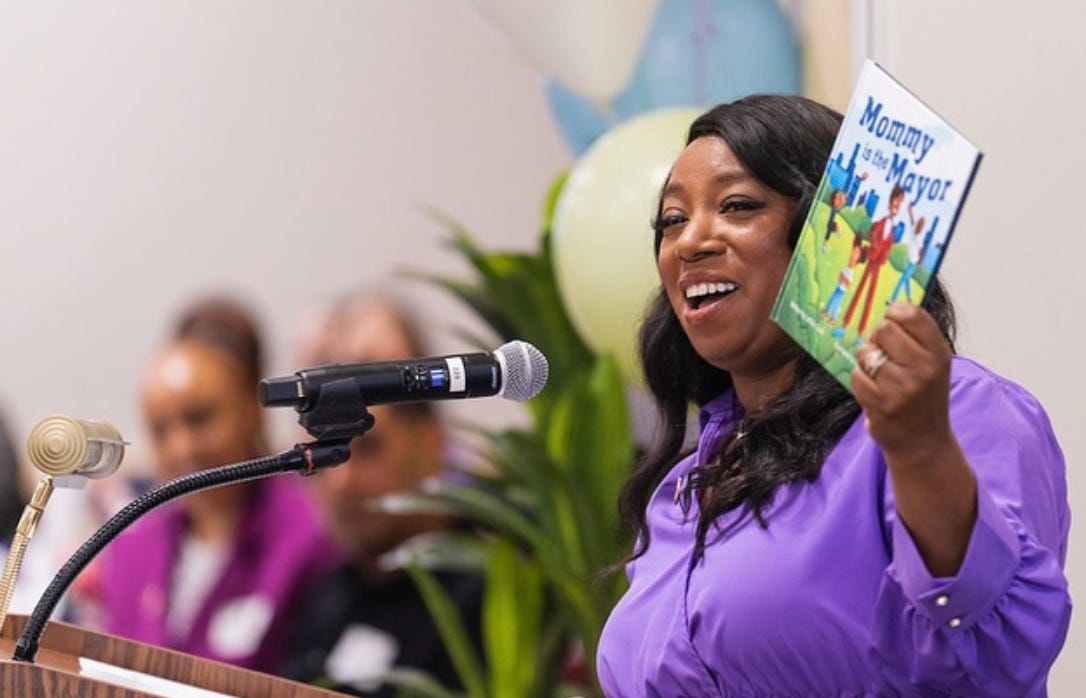
How to have a marketing plan, all those things. So Lakewood has done Lemonade Day. They’re doing it bigger and better than Tustin ever did. Anaheim and Lakewood actually did a Girls and Youth in Government, just literally modeled after what we did. And then honestly, writing the book was ... I had no idea how big that would become. I mean, we sold over 10,000 copies across the world.
JEFF PEARLMAN: Wait, this was Mommy is the Mayor?
LETITIA CLARK: Yeah. Yeah.
JEFF PEARLMAN: You sold 10,000 copies of your book?
LETITIA CLARK: Yes. I had no idea how successful it would be. I knew nothing about publishing. I knew nothing. And it obviously had an impact because I think it was a story that needed to be told and people hadn’t seen anything like that before. So I felt so great to be able to put something out there and it wasn’t theoretical. It was like, yes, I’m currently the mayor and I’m currently a mom, and so this is my story. And I didn’t have to say anything about me being a Black woman or the only woman.
It was all through pictures. We didn’t have to say any of that in writing. It was just illustrated and I just loved the representation in the book.
JEFF PEARLMAN: That’s cool. My knowledge of Tustin politics is not A plus. It’s probably a C minus. Why did you not run for mayor in 2022 when Austin Lumbard won the position?
LETITIA CLARK: Yeah, because we had term limits, so you could do eight years and it wasn’t clear that if I ran for a different position, whether it actually would restart the clock or if I would be limited and have to resign after two years because I had met the eight-year limit.
JEFF PEARLMAN: I see.
LETITIA CLARK: So something like that happened, I think in Costa Mesa and maybe Orange where the person tried to run for mayor in the middle of their council term and they were overruled that they wouldn’t be able to continue in the mayor position. So I didn’t want to waste money trying to run a mayor campaign and then have to step off and then just wanted to do it the right way. So essentially by law, it didn’t seem like I was able to run. So that’s why we really got behind Becky.
And then, we thought it was our opportunity to write history so that it’s like, “Okay, you never picked her to be the rotating appointed mayor. Let’s get her to run and get her elected” and it wasn’t successful.
JEFF PEARLMAN: You obviously served on the council with Austin Lumbard. You’re now running against him. He’s a Republican. You are not. I guess first, what was your working relationship like with him when you guys worked on the council?
LETITIA CLARK: Very cordial, very cordial. He has young kids, so we kind of always found connections in that. He’s a really quiet guy. I would say that we disagreed on a lot of policy things, but we always found a way to be extremely cordial, if not very respectful, but usually didn’t have a problem disagreeing behind the scenes. And sometimes in public would make it clear that we differed on policy issues. I guess the big comparison now is that I’ve talked in the community that the silence is deafening. It’s quiet to a fault.
There’s nothing being said about ICE presence in Tustin. There’s nothing being said about what we do to support our community to make sure that they feel seen and heard. And I mean when people are losing their SNAP benefits, when people don’t ... and I’m knocking on doors and folks are saying, “I can’t afford to live in Tustin anymore. I don’t even know how I’m going to pay my rent next month.” And so there’s just a silence from the council.
And namely in the mayor position, there’s an opportunity to speak on some of these issues that are impacting our community and there’s nothing. So that’s the real comparison there. But yeah, I mean, he’s a nice guy. We just-
JEFF PEARLMAN: It’s not a blood sport election.
LETITIA CLARK: I hope not. I hope not. And him and I had a conversation about being committed to not attacking each other. I kind of said, “Period, you won’t see any attack ads from me because it’s not my character.” And he said, “Well, you have the same commitment for me, but I can’t control what other people do.” Now, I didn’t give that caveat. I know that that can happen, but I also know that I can encourage all of my supporters to not ... to respect my wishes of the campaign. So I thought that was kind of interesting that it was kind of more of a comma, not a period.
It was a period from my perspective. But I mean, what? We’re 30 something days out, so I hope that we keep it focused on the issues and focused on our own campaigns. But yeah, he’s not one of these extremely loud MAGA Republicans that we see throughout the county or whatnot.
JEFF PEARLMAN: Wait, I’m kind of fascinated by something. In 2019, he posted on Instagram, this isn’t me dogging him actually, he had a picture of two people holding hands, and one is a Democrat and one is a Republican, he wrote ... I don’t think he came up with this. I think he just posted it, but … This is Bob. He voted Republican. This is Bob’s friend, Sally. Sally voted Democrat. Bob and Sally are still friends because Bob and Sally are both adults. Be like Bob and Sally.
And that was seven years ago. And I actually wonder, being serious about this, and I’m not even referring specifically to your election. Is that an unrealistic look at America in 2026 or do you think we can get back to something like that?
LETITIA CLARK: Yeah, I’m so optimistic in almost every other regard. I think we’re so far from the days of moderates on both sides of the aisle. And I think what we’re finding, at least in the Democratic Party, is you got to just find your section of the tent. It’s such a big tent, and yeah, all of us don’t agree with every single thing, but you got to find your area and you got to laser focus on your niche and try to accomplish what’s in your sphere because there’s just so much work to be done.
But I think, yeah, I’m always going to be the side of decency, the side of equity, social justice. That’s always going to be in my bailiwick. So if a Republican can get with some of those things, then sure, we can coalesce. But as long as the Republican Party is veering so far away from that, then I think it’s hard to say we can come together because what a Democrat is and what a Republican is today is just not what it was even seven years ago.
JEFF PEARLMAN: I wish more people ... like you said, you look at Austin Lumbard’s social media, he doesn’t seem like a bad guy. I will say he posted after January 6 happened, he wrote a very heartfelt thing about how awful this is. And I would say not a peep since, not a peep about ICE, not a peep about Trump, not a peep about deportations, not a peep about the Epstein files, nothing. And the problem is real leadership isn’t like muting yourself. Real leadership is actually sometimes going against and speaking out.
And I just think, again, I got no beef with this guy. I think it kind of sucks that you don’t have the wherewithal to at least say something.
LETITIA CLARK: Right. And at some point, are you now misusing your platform because you have an opportunity to speak to the broader community and it’s just nothing.
JEFF PEARLMAN: Are you an underdog?
LETITIA CLARK: No.
JEFF PEARLMAN: Do you feel like you’re going to win this?
LETITIA CLARK: Yeah, I do. I think I have the base. I think we’ve raised the money. We’re knocking on doors. We’re getting endorsements. We’re in a strong position now. I’m not taking anything for granted obviously, but I’ve had to remind some folks who I think are doubting in a biased way. They’re not even looking at the data. Not only is it a majority Democrat registered area now, it’s a plus eight Dem at large city now. So what’s incumbent upon us is now to turn out the voters and we’re doing everything.
I’ll have six plus mailers going out. We’re knocking on hundreds of doors every weekend. We have a broad coalition of support from veterans to unions to just about every Democrat elected official in the county and beyond. And we launched our campaign literally a year tomorrow. So we’ve been working. And again, I’m not a new no-name candidate that I was in 2016. And so, we’re capitalizing on my record and my roots in the community. And then, doing all the things that are needed for a winning campaign.
And yeah, not taking not one day for granted and working hard. And we say often that Republicans may be able to outraise us, but that doesn’t mean they can outwork us and they definitely can’t out ... Yeah, just work ethic. They can’t outwalk us and outwork us. So that’s the goal.
JEFF PEARLMAN: Is it true asking for money is super fun?
LETITIA CLARK: Now, the mayor being the best job in the world, that might be closer to truth than raising-
JEFF PEARLMAN: Wait, how much does it suck asking for money?
LETITIA CLARK: It sucks so much. It just is the worst thing. But I have learned to just remind people, look, this check is not going to me. This is not for me. This is not to lie in my pockets. This is not to make me rich. This is so we have a voice. This is so we have representation. This is so we have a fighting chance. I think I’m even more passionate about not leaning into the fundraising absolutely sucks and I don’t want to do it. I’m on the phone every week, every day making some type of call.
Because I did my dissertation on women of color running for office and their fundraising experience. And just data-wise, I mean literally the best candidates out there could not raise their counterparts if they were white and male. Okay, I’ll give you a great example. I had one union, they love me, they support me. They’re like, “We’re with you, Letitia. Come meet with us.” Sat with them for an hour. They wrote me a maxed out check. Okay, awesome. I’m thinking I’m good. Then I see Austin’s report, they gave him a maxed out check too.
So I called them and I said, “Hey guys, what’s going on? Are you endorsing both of us?” “Oh no, no, we’re not endorsing both of you. We’re supporting you.” “Well, why’d you guys give him a maxed out check?” And I said, well ... and then what did he say when he met with you? What commitments did he make?” “Oh, we didn’t meet with him. One of our members just thought it’d be a good idea to send him a check.” So he’s getting checks, not even having to ask for them.
And here I am, I had to spend time, meet with these folks, and these are supportive folks. So that’s kind of what I’m up against. So I don’t have time to get too down about how much it sucks to raise money because there will be folks that just write him a check without him even asking, without him even wanting it.
JEFF PEARLMAN: I just want to say, ever since I started this website, I’ve had a good number of people say to me, “You should run for something. You should run for something.”
LETITIA CLARK: Yeah.
JEFF PEARLMAN: You just gave up ... in the future, I’m going to literally record that segment you just said to me and just play it for anyone who says, “Why aren’t you running?” I’m just going to be like, “Here’s Letitia Clark right here. She answered for me. She didn’t even know she was doing this. Public service. Thank you.” You summed it up. Wait, I’m being serious about this.
LETITIA CLARK: Yeah.
JEFF PEARLMAN: I get it. You like the job. I get it, public service is like, it just seems so unpleasant to run for office. Is there a bright side to ... forget the winning. Is there actually a bright side to the process of running for office?
LETITIA CLARK: The process is tough. It’s literally like the sausage being made, but once you put it on the grill and it’s cooking and yeah, it tastes good. But the process of making that sausage, I don’t know anyone who says they love campaigning. Now, I’ll tell you, I’ve learned to love knocking on doors because you get to talk to people and you’re having real genuine conversations, and I do truly enjoy that part, but I’m in communications. I know you have to hear something seven times before you remember it, so it won’t matter how ... I can’t knock on every door seven times.
JEFF PEARLMAN: Yeah.
LETITIA CLARK: So, we have to raise money to do the mail, to do the ads, so people see that name enough times to remember, “Oh yeah, that’s who I talked to at my door. That’s who called me and we had this conversation.” So if I don’t want all that work to be in vain, I know I have to raise the money to help remind voters what I’m all about and what I stand for, and that’s why you need the money. But no, it is not pleasant. It is not fun.
And you’re going to get people in those three buckets. Whoever says it’s fun has a whole nother motive. It is not to serve. It is to get contacts or to find out who has money in town. It is not because they just want to serve. They’re finding enjoyment for other reasons.
JEFF PEARLMAN: Right. I’m going to end this with a couple of rapid fires. You’re good with that?
LETITIA CLARK: Okay.
JEFF PEARLMAN: Give me your three favorite musical artists of all time.
LETITIA CLARK: Okay. SWV.
JEFF PEARLMAN: Really?
LETITIA CLARK: I’m a 90s-
JEFF PEARLMAN: Wait, Letitia. We’re about to be best friends. My son is a 19-year-old college junior, and he loves SWV, like loves …
LETITIA CLARK: I felt like I was born 10 years too late. I was like 11 when SWV was in their prime.
JEFF PEARLMAN: Come on. SWV is awesome.
LETITIA CLARK: I was 20 years old at the time.
JEFF PEARLMAN: All right. SWV. Who else?
LETITIA CLARK: SWV, I would say D’Angelo. Rest in peace.
JEFF PEARLMAN: My son’s favorite artist.
LETITIA CLARK: Yeah, my gosh. Then he has great taste.
JEFF PEARLMAN: True.
LETITIA CLARK: And then probably Brandy.
JEFF PEARLMAN: If only you were a 19-year-old student at Northeastern, you’d be dating my son right now. I’m not kidding.
LETITIA CLARK: My gosh, my gosh.
JEFF PEARLMAN: You just hit three of his top five. That’s really funny.
LETITIA CLARK: Wow. I love it.
JEFF PEARLMAN: Give me your favorite movie of all time.
LETITIA CLARK: Probably Coming to America with Eddie Murphy.
JEFF PEARLMAN: The sequel, very disappointing though.
LETITIA CLARK: Yeah, just terrible. Just a waste of vibe.
JEFF PEARLMAN: If I can eat one meal in Tustin, where should I go?
LETITIA CLARK: Go to American Grub, get a grilled cheese and tomato soup on any given day. It could be hot, rainy. It’s literally going to hit the spot.
JEFF PEARLMAN: Where’s your favorite vacation spot you’ve ever been to?
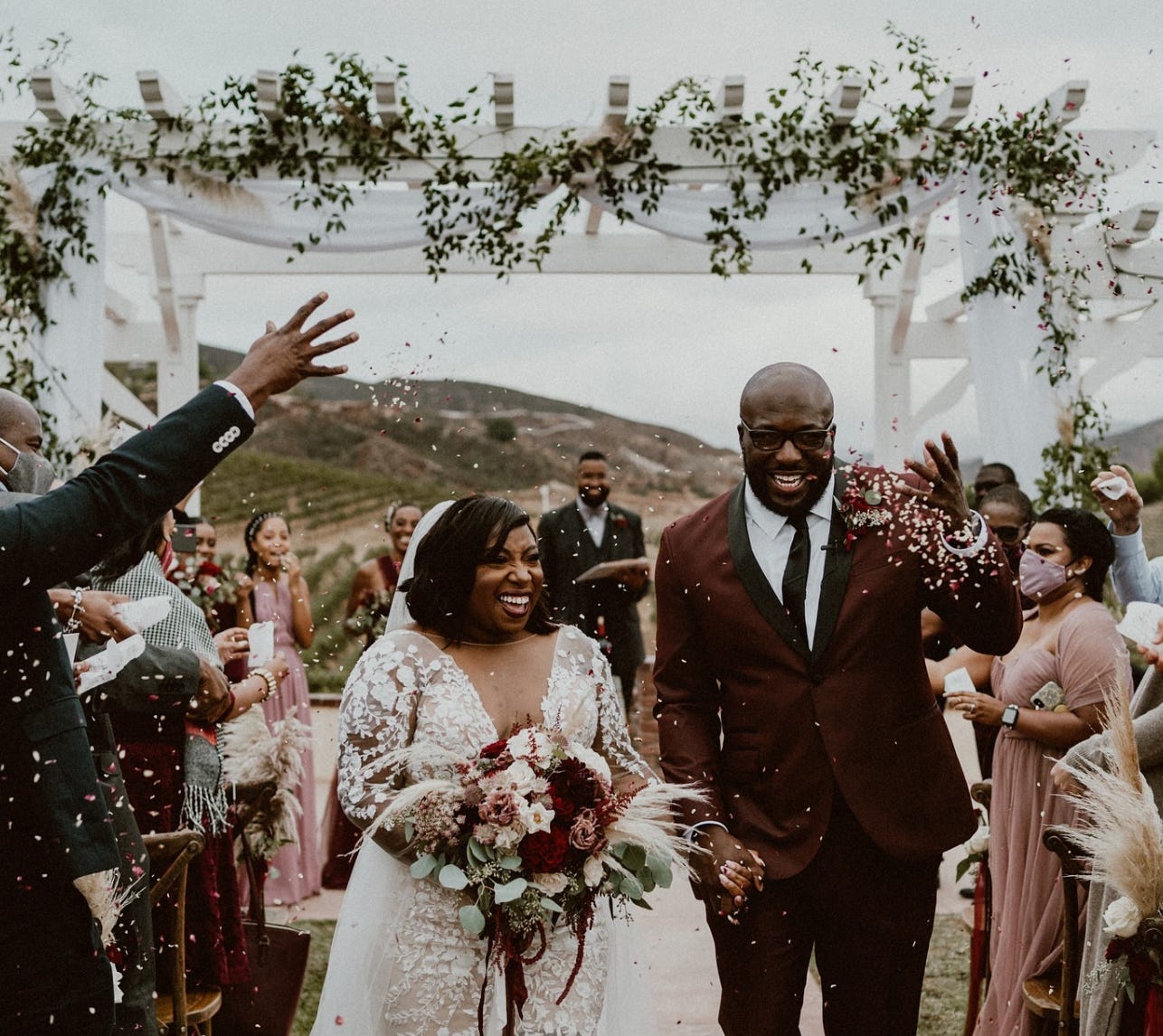
LETITIA CLARK: We just went to Maui with the family, and it’s the first time in my family’s whole experience of ever going on vacation. I didn’t plan any excursions. I didn’t overbook us, and we had the best time and just really relaxed. So that’s probably going to be my favorite spot because my kids got to see me and my husband totally relaxed. We’re like, “Hey, do whatever you guys want. We don’t care.” And they’re like “Oh, you all are different here.”
JEFF PEARLMAN: Last question. Give me your three political role models. How about that? We’re heroes.
LETITIA CLARK: Well, Shirley Chisholm is always going to be pretty high on the list.
JEFF PEARLMAN: Yep.
LETITIA CLARK: Well, I mean, I want to say Michelle Obama, but she’s not-
JEFF PEARLMAN: You can count her.
LETITIA CLARK: And then maybe Ayanna Pressley.
JEFF PEARLMAN: Okay. Good one.
LETITIA CLARK: I borrow from her. She likes to say, “Policy is my love language,” and I resonate with that. I’m like, “Yeah, I get that.”
JEFF PEARLMAN: I recently interviewed Katrina Foley for this website, and I always thought she was from afar little gruff. And I’ve got to say, she loves meetings and she loves being wonky. And I was like, “Wow, you’re just a policy nerd.”
LETITIA CLARK: She’s such a nerd in all the good ways, right?
JEFF PEARLMAN: Totally. Are you the same?
LETITIA CLARK: Yeah, and I don’t have a lot of ... my circle’s pretty small, so I don’t just surround myself around a lot of politically wonky people, but when I find folks that I can just nerd out with over politics who are actually genuine friends, it is literally the best.
JEFF PEARLMAN: I’ve got to say—dinner with Letitia Clark. Maybe not that fun.
LETITIA CLARK: Hahahaha. Well, if we keep the politics out of, it might be fun. We just can’t call it a meeting, Jeff.
JEFF PEARLMAN: Wait, let me ask you a final, final question. Actually being serious, I ask this of everyone. Do you think, whatever, 10, 15, 20 years from now, we look back at this period and we think that was really the ruination of America, that was the beginning of the end and everything with Trump just ruined this place. Do you think we look back and say, “That was a really dark period that somehow we got past?”
LETITIA CLARK: Yeah. Yeah. And I think it kind of starts with January 6th. There was so much chaos going on before that, but once ... it was such a violation, which oddly enough, I actually heard that Austin had commented on a Jesus statue being violated in Santa Ana, and our veteran statue, something happened ... someone was trying to steal the copper, and he had gone on record saying that it was such a violation. It’s like, “Yes, you’re right. It is a violation.” So how are any of us okay with what happened on January 6th.
Have you ever been in the halls, and if you’ve ever been in any place where it’s supposed to be solemn and respectful, and to see what happened, and it was allowed, and it was encouraged, and I think we crossed a line that we haven’t been able to get that back since then. And yeah, I do hope ... I don’t know about 10 years though, Jeff. I don’t know, but I think we will get to a time saying, “How do we get through that?” And we never want to go back to that. It’s like a pendulum.
And what we saw in 2020 was that pendulum swing far, far to the left. Everyone was DEI. Then we added the A, and everyone was all on board and okay to say Black Lives Matter, and then it shifted right back. We just need to get a little bit swinging left of center again. So yeah, I don’t know. I don’t know what will happen to get a-
JEFF PEARLMAN: But what I’m hearing you say is Black Lives do not matter. Is that what I’m- [Laughs]
LETITIA CLARK: [Laughs] I’m definitely not saying that.
JEFF PEARLMAN: I didn’t think so.
#TOC