
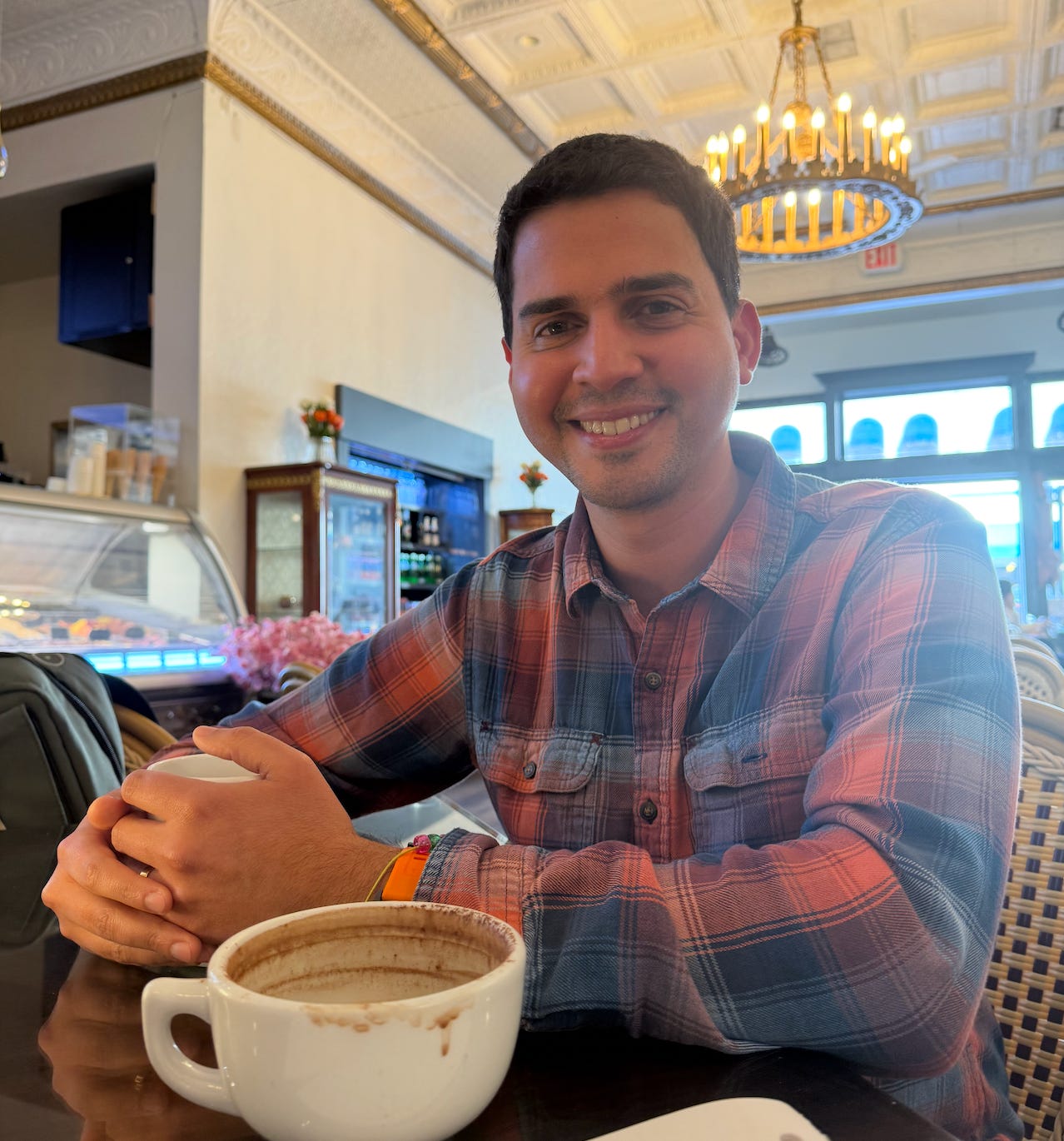
J.J. Galvez is a near-certain loser.
I say that not derisively, but truthfully. He is an unknown Democrat, running in the CA-71 Assembly race against an incumbent, Republican Kate Sanchez, who has him dwarfed in name recognition, financial wherewithal and potential voters (the district is plus-10 GOP).
But, truly, J.J. Galvez is a winner. He is an unknown Democrat, running in the CA-71 Assembly race against an incumbent, Republican Kate Sanchez, who has him dwarfed in name recognition, financial wherewithal and potential voters (the district is plus-10 GOP). And yet—the 34-year-old going for it. When nobody up stood up and said, “We need to fight!”, bro stood up and said, “We need to fight!” Not for glory. Not for social media points. Nope—he’s running because he feels compelled and connected and, in a way, called. Victory or defeat.
Can he win? I mean—was UTSA going to beat UConn in the first round of the women’s tournament? The odds were long, the decks were stacked … and the Roadrunners fell by 38. But they were still in the game. Still on the court. Scrapping. Throwing elbows. Working their asses off and brawling for respect. They inspired people. Hell, they inspired me.
J.J. and I sat down for coffee in Orange a couple of weeks ago. One can visit his website here, and his Instagram here.
Here’s our chat …
JEFF PEARLMAN: “All right. Question number one. Serious question. You’re 34-years old. You must have better things to do in your life to run for political office. So I know the whole cliche answer, America, blah, blah, blah, make it better. But why would you actually throw yourself into an assembly race?”
J.J. GALVEZ: “Well, for me, it starts with my background and it really is ... I grew up in a different country and I grew up really looking up to the U.S. and it was a goal of mine to come here as I was growing up. And I was really lucky that I was born into a middle class family in Honduras, which is a very small percentage of the population. We have 70 percent of the population living beneath the poverty line. And for me, being born into a middle class family meant that I was able to go to a private bilingual school since I was in kindergarten. And so I was exposed to opportunities there for things like being able to go and study abroad. And for me growing up, it was really a goal to get a scholarship to come to the U.S. because I felt it was a way for me to just open up more possibilities for my future. And I accomplished that goal.”
JEFF PEARLMAN: “You were 18 when you came?”
J.J. GALVEZ: “Yeah, I came from college. I came on a student visa and my plan was actually to go back. My parents and my three brothers, they’re all back in Honduras. And I ended up staying because I met the person who’s now my wife and she wanted to be really close to family and we figured out a way to make it work and we’ve been together since basically freshman year of college at Loyola Marymount.”
JEFF PEARLMAN: “That’s quite a saga.”
J.J. GALVEZ: “When you grow up in a different part of the world, especially a country like Honduras where you see a very different level of poverty of insecurity, like personal insecurity and lack of opportunity, it’s a completely different world from what we have over here. And what we have going on right now at the national level is basically the kind of government that we’ve had in Honduras forever, which is the reason why countries like Honduras are chronically underdeveloped because it’s people that come into power that are only empowered to serve themselves. They’re abusing power for their own benefit.
“The amount of corruption that’s going on at the national level right now, not to mention just the full breakage of any kind of law that doesn’t benefit themselves. And so I first got politically activated in 2020, and that was because I was completely caught by surprise like most of us were that Trump won in 2016. And so when he was running for reelection, I wanted to do something. And so I signed up to be a volunteer to make phone calls to Spanish-speaking voters in Arizona, because Arizona was a swing state. And so I did that, and Biden won. And then after that, I just went back to my career, my day job. I’m a product manager, strategy and operations manager, basically somebody that sits at the intersection of a bunch of different teams and tries to push things forward. So I went back to that and I thought it was like, ‘This is it. The US is going to continue to be the US that it’s always been.’ And 2024 rolled around. I started getting involved as a volunteer again. That’s when I got involved with the Canyon Democrats. They sent me a postcard …”
JEFF PEARLMAN: “The postcard worked!”
J.J. GALVEZ: “It did. I went to an event. I had a pancake social and I ended up showing up and I just kept on going to that. And I did phone banking again, did door knocking for the first time. I actually knocked on doors here locally for Joe Kerr, who I didn’t know, but I just knew that he was the only Democrat running in the race. And I figured if we lose the presidency, at least we can win Congress. Of course we didn’t. And I also went out to Arizona to knock on doors for the presidential campaign.”
JEFF PEARLMAN: “Having your experiences door knocking ... I don’t have an answer for this, so I’m not leading you in one direction. Is it effective or is time that is better spent doing something else?”
J.J. GALVEZ: “It’s effective. I don’t think the silver bullet that people sometimes make it to be like, ‘Oh, it’s all about knocking on doors and that’s everything you have to do.’ Winning in politics I think is very complicated and it takes a lot of different things coming together. Many of those things are beyond your control. Right now we’re really benefited by the current environment and even if you run a campaign that’s not great, you might still win because you’re being driven by the macro environment. But I think as far as voter contact, I mean, I’ve talked to people over the phone. I’ve written postcards myself. I’ve posted online … and the connection that you get face to face with the person is hard to match.”
JEFF PEARLMAN: “Wait. So why are you running?”
J.J. GALVEZ: “Yeah, Trump got elected the second time. And so for me, what that meant was, well, I have got to stay involved. I’ve got to keep on doing something. And so I got more involved with Canyon Democrats. I started a group of younger members of the club that just get together on a monthly basis to ... First, it was really to just hang out. I was like, ‘Oh, I need to find people that kind of remind me that I’m not alone.’ So that was the genesis of that. And in a social setting, we just got together for happy hours. And then after that, it’s evolved to much more sort of action-driven, like take action by going to city council. I started organizing rallies for the Canyon Democrats, started basically saying yes to a bunch of opportunities. Somebody said, “Hey, you should run to be an ADEM …”
JEFF PEARLMAN: “ADEM?”
J.J. GALVEZ: “Basically, in the California Democratic Party you can become a delegate through a bunch of different ways. One of those ways is you can actually be elected in your local assembly district to basically be a party official. And that’s what an ADEM is. So I said, ‘Yeah, sure.’ And it’s a thing where there are 14 spots in every assembly district, seven for women, seven for men. And so there were only seven men running. So I didn’t really have to do anything. I just put my name down.”
JEFF PEARLMAN: “What I’m hearing is you won your first election in a landslide …”
J.J. GALVEZ: “Indeed! And so that gave me the opportunity to the state party convention, which was something like, ‘Whoa, I never thought I was going to be doing something like this.’ And so that was pretty cool just to learn a little bit more about how things work inside. The main thing that struck me was that a ton of the party infrastructure is basically volunteers. It’s not like there’s like this magic wand operating in the background, but it’s just a bunch of people spending their own time because they care.
“Then the other big thing was I got appointed to my local board in Silverado. Silverado is an unincorporated community, so we don’t have a city council. The only thing that we have that manages money that we get from the government—which comes through the county—is a local board. And it’s a group of five people and we manage a couple parks, a couple community centers, and it’s an elected position. There was a vacancy on the board and I raised my hand because I wanted to get involved. I just want to do something outside of work where I feel like I am spending my anxiety, my energy in a productive way. And so I raised my hand, nobody else did and …”
JEFF PEARLMAN: “You’re 2-0 in elections.”
J.J. GALVEZ: “So I became the treasurer and that’s actually been a really great experience. It’s been so much more work than I would have hoped it to be, but it’s been actually an incredible experience because A. It’s given me some training in terms of how to navigate the public sector, but then B. There was an incredible opportunity for me to have an impact immediately. Our funding from the county went from about $160,000 a year to about $100,000 a year. We had no control over that, and when I came in, that had already been going on. We had already been told that our funding was being reduced, so for me it was, ‘How do we rebalance the budget? How do we cut down expenses? And can we do that in a way that we’re still having community services like ...wWe do senior lunch bunches where like once a week we subsidize lunch for like a bunch of seniors that get together at the community center.”
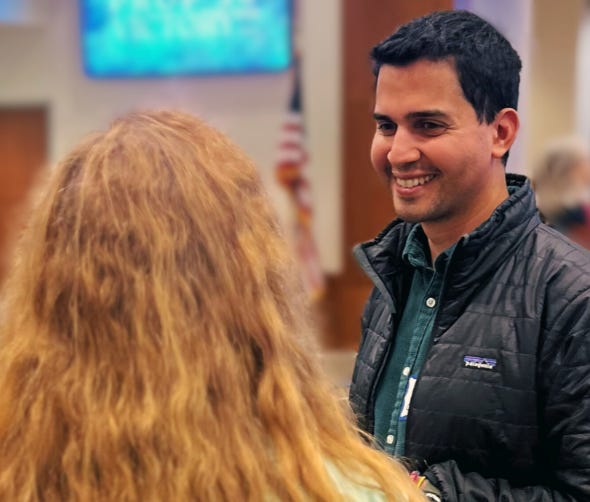
JEFF PEARLMAN: “You seem like a guy who enjoys this stuff. The challenges of it all. Almost like the nerdiness of it.”
J.J. GALVEZ: “Yeah. I mean, I’ve always had a very curious mind and just coming from the ... I think what really attracted me to startups initially was the thing of building something, but also having to figure it out a lot by yourself. When I entered the workforce, my first job was a tech startup of a project that had come out of a class at LMU, I was really afraid to ask questions because I, for some reason, thought that everybody had it figured out, and I didn’t want to be the dumb person asking questions in a meeting and stuff like that. And it took me a while to realize that nobody knows what’s going on, and that this is the opportunity. There’s a quote that I love from Steve Jobs—“The moment that you realize that everything around you was invented by another person everything changes.”
JEFF PEARLMAN: “Love it.”
J.J. GALVEZ: “I enjoy taking a step back, looking at the bigger picture, and then just going back to the basics, questioning the assumptions. Why do we have to do it that way? It’s always been that way, but why does it have to be that way? And there’s a lot of opportunity in government to disrupt in that way. We have a lot of solutions and institutions that came about decades ago for a problem that has evolved over time. The only constant is change, and so we’ve always got to be changing. So I got to the parks board, we were able to rebalance the budget, and that is something that I am definitely advertising on my materials and I need to talk more about, because I think it’s a really good story, especially for somebody running as a Democrat, when so many Republicans have this image of Democrats being fiscally irresponsible. I think it’s a good example of the stuff that we’ve been able to accomplish—rebalancing the budget without meaningfully sacrificing community services.
“So anyways, somebody from the Democratic Party of Orange County reached out and she said, ‘Hey, why don’t you run for state assembly? We need somebody to run …”
JEFF PEARLMAN: “How long ago was this?”
J.J. GALVEZ: “This was in July of last year, and I initially said no. I didn’t really need the life change. But she kept on asking and I thought more about it. And I really realized that I get a level of meaning from being involved in a way that I don’t from my business career. And for better or worse, one of my personality traits is that I have always been very mission-driven, and that can be a superpower, but I believe that our superpowers are also our greatest weaknesses. And for me, I’ve seen that happen in my career where I’ve become too committed to something that I didn’t really believe in, or I become too disengaged because I don’t really understand what is this all for.
“And so I think with public service, I think I’m good at it. I get meaning from it. It’s something that contributes to society. And so for me, I think this is where I need to be right now. I think I can do this. I know that I’m in a really tough district. The likeliest outcome here is that I don’t win.”
JEFF PEARLMAN: “Wow.”
J.J. GALVEZ: “I am aware of that. Yeah. 100 percent. I mean, you just wrote about how difficult CA-40 is, and you’re not wrong. My race us even harder.”
JEFF PEARLMAN: “OK, so how do you win? I want the path for one of the great upsets in California politics. Tell me …”
J.J. GALVEZ: “Yeah. I’m going to give you the path, but before I give you that, I’m going to give you an answer that is very counterintuitive and maybe is something that gets me some backlash or whatever. I didn’t get into this to win. I got into this to make a difference. And so for me, what that means is I have a platform to present myself as an immigrant, to talk about things that I believe in, talk about different things. And if I win, it’s amazing and I think there’s a path to win, but if I don’t, that is much more important to me than trying to play the game and calculate what do I say, what do I not say? Because it’s not the point of why I’m doing this. I’m doing this because I care about what’s going on in the country and I think having somebody like me in a state that’s so powerful can contribute to guiding the country back on the righteous part.”
JEFF PEARLMAN: “The district is plus-nine Republican …”
J.J. GALVEZ: “Plus 10.”
JEFF PEARLMAN: “Yikes.”
J.J. GALVEZ: “I mean, you’ve seen the news of districts with worse margins than this one flipping. So we have the data points to indicate that there could be a major upset here. We have an incredible group of volunteers. We were able to collect about 1,200 signatures for our nomination papers, and we only needed about 40. We needed 857 to waive our candidate filing fee, which wasn’t a huge amount of money. It was about $1,300, but it wasn’t about waving that. It was about building the ground game and giving ourselves a goal to prepare ourselves for what’s to come. And so if we are able to get a group of 100 engaged volunteers, which we have over that amount of people, I’m talking about people that are consistently showing up for events, we are able to get to build a grassroots game that I think can help us do something special.
“Besides that, we have to do a bunch of stuff on social media, which I am lagging behind on because I have a full-time job and I have the parks board and I’m doing this as well, but we’re getting a lot of engagement from our posts, even though I only have like 200 followers. It’s a lot of 50 likes on those different things, a lot of views. So the combination of digital ground game, riding the wave and having a message that is hyper-focused on economics, I think is going to give us a shot. And what I mean by economics is it’s all about lowering the cost of living and growing the opportunities for revenue in our district. I also think that there is an opportunity when it comes to messaging to talk a lot about unity. That’s something that I think you have to do in a district like this, because you can’t be a firebrand talking about super, super left-wing stuff because there’s a 10 point differential. But at the same time, I mean, how many people just hate the fact that you can’t talk about politics? Politics can’t even creep into a personal conversation because then everything gets super ugly. How many relationships in our personal lives with friends, with family, have been damaged? So I try to talk a lot about unity. We all care about the same core things, but we live in an environment, a media environment, a social media environment that just drives us to the test each other. And if anything, if I can just be a voice of optimism, a voice that’s stretching out hands … I think that’s refreshing to people. I also think that gives us a better chance to win. So it’s an economics message that’s coupled with a strong message on unity.”
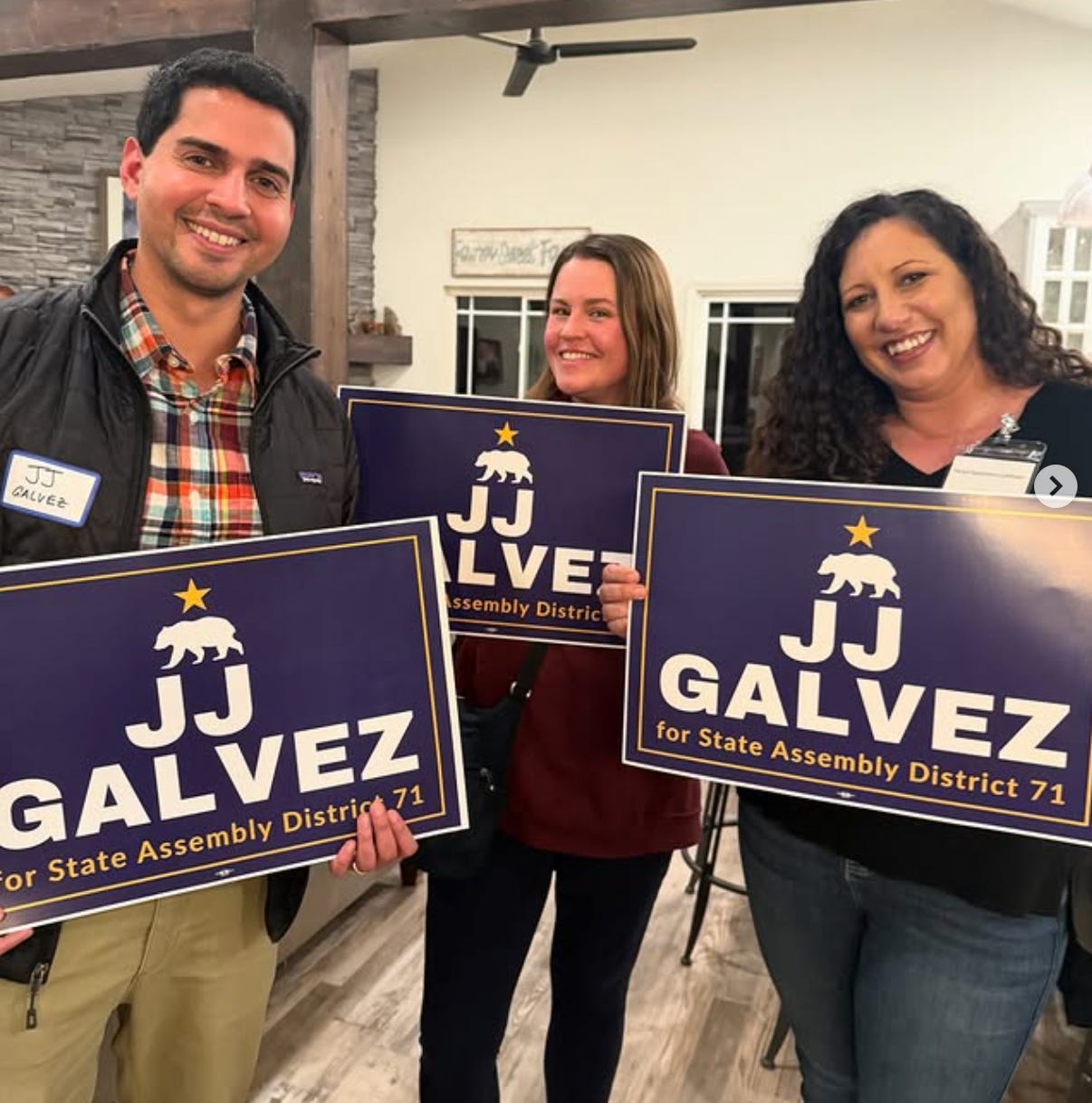
JEFF PEARLMAN: “Fundraising. Fun times?”
J.J. GALVEZ: “It’s not my favorite part of this. But … it’s necessary. The main thing you need money for is mailers, marketing. I had a campaign manager, but I decided to part ways because he’s not what we needed right now. He’s a great guy and he’s a friend, but, I’m figuring this stuff out. I’ve been really lucky with just the amount of in-kind contributions that people are providing through just their time. Whether it’s website, graphic design, field coordination. There zte a lot of people who really believe in what we’re doing. But in terms of raising money, my goal is to raise $350,000.”
JEFF PEARLMAN: “How much have you raised?”
J.J. GALVEZ: “About $30,000. So I have a long way to go.”
JEFF PEARLMAN: “Do you know how much Kate Sanchez has?”
J.J. GALVEZ: “A lot. She’s going to out-raise me. If I’m able to get to $300,000 $350,000, I think she’s going to have double the amount of money. But that’s okay because it’s not just about ... I mean, that’s enough to be within striking distance to just be able to invest in the marketing materials that we need in promoting our digital advertising and in having the internal operations infrastructure to be able to leverage our volunteer enthusiasm that we have.”
JEFF PEARLMAN: “I find myself use boxing a lot in political metaphor. You want to have a puncher’s chance. You’re not going to be the favorite. But if you can be in the ring and you have a shot …”
J.J. GALVEZ: “Any given Sunday.”
JEFF PEARLMAN: “That’s football. But I get it.”
J.J. GALVEZ: “Were it just about money, Kamala Harris would be president.”
JEFF PEARLMAN: “Have you met Kate Sanchez?”
J.J. GALVEZ: “Literally never.”
JEFF PEARLMAN: “How much of your campaign, if any, do you focus on her?”
J.J. GALVEZ: “So, in the primary it’s just the two of us, and it’s a matter of how close can we get. And I want to show potential investors, interested parties that we have a chance to flip this. And, hopefully, people then see reason to invest in the general. Hey, here’s some money for you. And unions and different things like that. But when it comes to the general, we’re going to have to get a lot more of those independents to participate and come to our side. And a way we can do that is by counter-positioning myself versus her as her being somebody who is just very ineffective. Her track record is not great.”
JEFF PEARLMAN: “Meaning it’s super MAGA?”
J.J. GALVEZ: “Well, we’re not really going to focus so much on the MAGA stuff. I mean, she is very MAGA, but she’s just not an effective politician. She’s not an effective representative for you. She has passed zero bills since she got elected in 2022, and she’s missed the second most amount of votes of the entire state legislature. That’s across assembly and state senate.”
JEFF PEARLMAN: “See, that’s a good message.”
J.J. GALVEZ: “So it’s not about the cultural stuff. It’s not about the red meat, the rah, rah. It’s about lowering the cost of living.. If I can position myself as somebody who’s pretty centrist, and I can convince enough people in the district, especially right-leaning independents, that hey, he seems like a pretty reasonable guy. A guy who wants to help everyone, regardless of politics. So what he’s talking about, about bringing funds back to the district and helping us out here, he probably is in a better position to do that than Kate. And Kate’s record isn’t really great. She hasn’t really done anything. So maybe we can give him a shot. And so that is going to be really important.”
JEFF PEARLMAN: “How much of a problem is just people not knowing what the assembly is, not caring about the election?”
J.J. GALVEZ: “I think it’s a big challenge. I can talk for hours now about the assembly, but before running for this, it’s like ‘The assembly? What is that exactly?’ It’s like, ‘Oh, we have a senate and we have an assembly.’ So it is a challenge. It’s where we have to be out there and we have to be talking to people.”
JEFF PEARLMAN: “How many hours a week do you put into this? And is your wife like, “Ugh, we just go out for dinner? Can we just watch ‘Love is Blind’, please, something?”
J.J. GALVEZ: “My wife’s really happy because she sees that I’m really energized by this. If she had it her way, she would have picked something else in life for me to be energized by it, but she’s very proud. It’s 30 hours a week, after 40 hours of my job. So it’s not nothing. But I feel a sense of real purpose.
“I feel alive.”
Keep it up JJ - America needs more young people like you.
Jeff, I love that you are interviewing and publicizing candidates. This interview is great, not only because JJ Galvez is great, but because it includes information about how politics actually works in the Democratic Party. I get so tired of people who complain about “The Democrats” as if our party had a DJT-equivalent to whom the rest of the party must bow. My answer to that complaint is “if you’re a registered Democrat, the party is YOU.” But people don’t like that answer. They prefer the cult-leader model. It’s so discouraging.